
Puerto Rico’s Folkloric Musical Genres
Explore Puerto Rico’s most important folkloric musical genres—Bomba, Plena, Música Jíbara, and Danza Puertorriqueña—and discover how they reflect the island’s history, identity, and cultural soul.
Maestro Ramirez Publishing
5/25/20265 min read
Puerto Rico’s Folkloric Musical Genres
From Afro-Puerto Rican rhythms to rural songs and elegant ballroom traditions, Puerto Rico’s music tells the story of a people, a culture, and a nation.
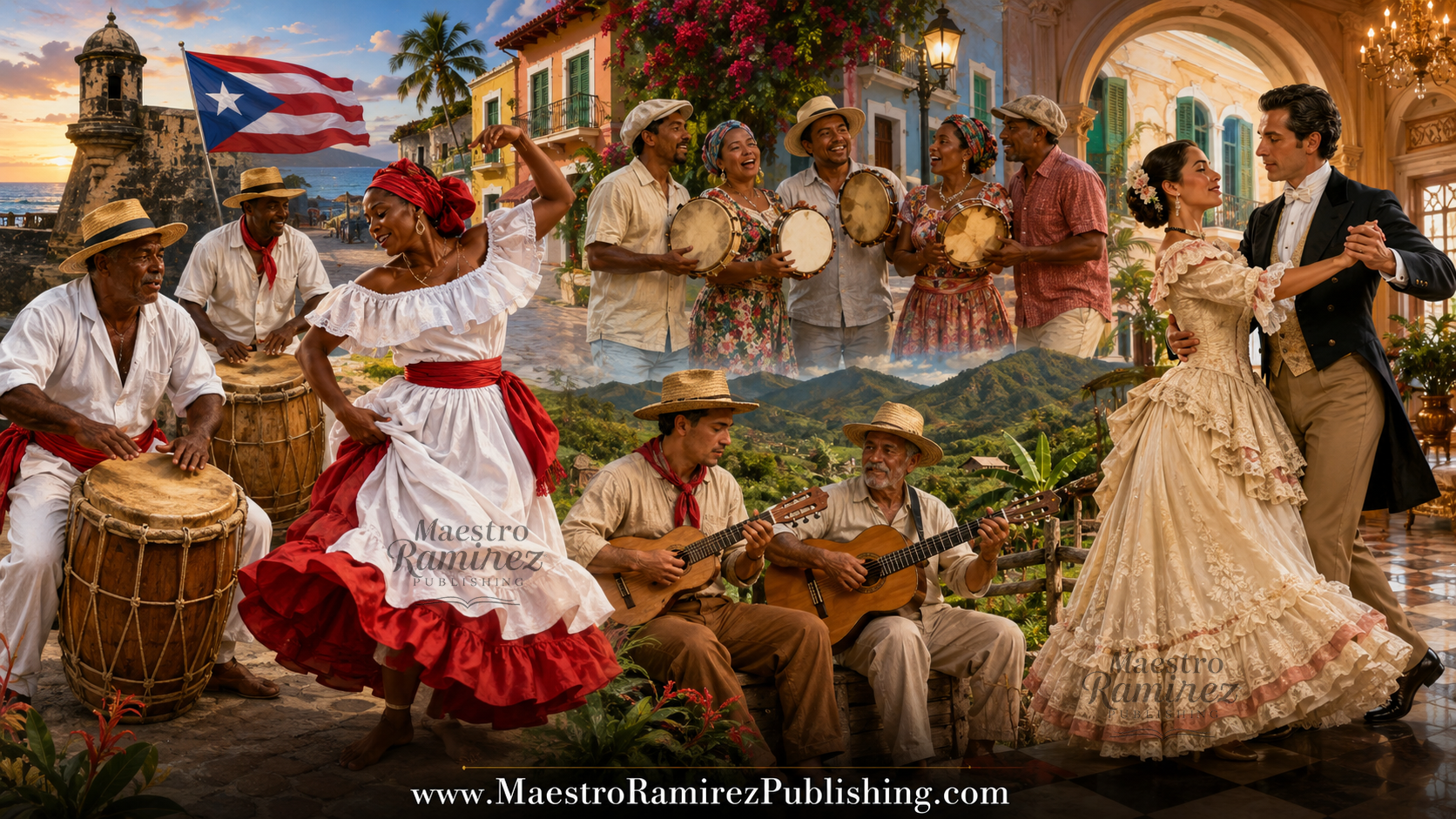
Puerto Rico’s folkloric music is a living portrait of the island’s history. It carries the memory of African ancestors, Spanish traditions, rural communities, urban neighborhoods, and the creative spirit of Puerto Ricans who transformed hardship, celebration, faith, and everyday life into powerful musical expression.
Four of the most important folkloric genres in Puerto Rico are Bomba, Plena, Música Jíbara, and Danza Puertorriqueña. Each one developed in a different setting, yet together they form a rich musical heritage that continues to shape Puerto Rican identity today.
Bomba: The Afro-Puerto Rican Voice of Resistance and Expression
Bomba is one of the oldest musical traditions in Puerto Rico, with roots reaching back to the 17th century. It developed among enslaved and free African communities, especially in coastal areas where sugar plantations and African cultural traditions played an important role.
Bomba is much more than music. It is a conversation between the dancer, the drummer, and the community. In a traditional bomba performance, the lead drummer follows the movements of the dancer, not the other way around. This creates a powerful dialogue where the dancer “speaks” through gestures, footwork, skirt movements, and body expression.
The instruments usually include barrel drums called barriles, along with maracas and call-and-response singing. The lyrics may tell stories of struggle, joy, daily life, love, or social commentary. Bomba is deeply connected to Afro-Puerto Rican identity, dignity, resistance, and cultural survival.
Today, bomba is performed in cultural festivals, schools, community gatherings, and professional stages. It remains one of Puerto Rico’s strongest symbols of African heritage.
Plena: The Singing Newspaper of the People
Plena emerged in the early 20th century and is also rooted in Afro-Puerto Rican culture. While bomba is older and more ceremonial in character, plena became known as the music of the streets, neighborhoods, and working-class communities.
Plena is often called “el periódico cantado,” or “the sung newspaper,” because its lyrics traditionally told stories about local events, community news, politics, romance, humor, and everyday experiences. Before radio, television, and social media, plena helped people share information through song.
The most recognizable instruments in plena are the panderetas, hand-held frame drums of different sizes. These drums create a lively rhythmic foundation, often accompanied by güiro, accordion, cuatro, or other instruments depending on the region and performance style.
Plena has a joyful and direct energy. It invites people to sing along, dance, and participate. Even when the lyrics speak about serious subjects, plena often carries a spirit of resilience and community pride.
Música Jíbara: The Rural Soul of Puerto Rico
Música jíbara comes from Puerto Rico’s countryside and reflects the life, values, humor, poetry, and traditions of rural creole communities. The word jíbaro refers to the rural mountain people of Puerto Rico, often associated with farming, simplicity, independence, and deep connection to the land.
This music is closely tied to instruments such as the cuatro puertorriqueño, guitar, bordonúa, tiple, güiro, and other string and percussion instruments. The Puerto Rican cuatro, with its bright and expressive sound, is especially important and has become a national symbol.
Música jíbara often includes poetic singing styles such as décimas, where singers improvise or perform ten-line verses. These songs may speak about love, faith, patriotism, rural life, nature, family, and social values.
During Christmas and holiday celebrations, música jíbara becomes especially prominent through aguinaldos, seis, and parrandas. These traditions bring families and communities together in song, food, friendship, and celebration.
Música jíbara preserves the voice of Puerto Rico’s countryside and reminds listeners of the island’s agricultural roots and poetic imagination.
Danza Puertorriqueña: Elegance, Romance, and Creole Identity
The Danza Puertorriqueña developed during the 19th century as a refined creole ballroom form. It was influenced by European salon dances, but Puerto Rican composers and musicians transformed it into something uniquely their own.
Unlike bomba and plena, which are strongly connected to Afro-Puerto Rican community expression, danza puertorriqueña is often associated with urban salons, formal dances, piano music, and the educated creole classes of the 19th century. Yet it still carries the emotional personality of Puerto Rico.
The danza is graceful, lyrical, and often romantic. Many danzas were written for piano and later arranged for bands, orchestras, and other ensembles. The music often features elegant melodies, expressive harmonies, and gentle rhythmic movement.
One of the most famous composers associated with the danza puertorriqueña is Manuel Gregorio Tavárez, often called the father of Puerto Rican danza. Another major figure is Juan Morel Campos, whose works helped bring the genre to artistic maturity.
The danza became an important symbol of Puerto Rican cultural identity, especially during a time when the island was defining its own artistic voice.
Four Traditions, One Cultural Legacy
Bomba, plena, música jíbara, and danza puertorriqueña each represent a different part of Puerto Rico’s cultural story.
Bomba speaks with the strength of African memory and community resistance. Plena carries the voice of the people and the rhythm of neighborhood life. Música jíbara preserves the poetry and traditions of the countryside. Danza puertorriqueña reflects the elegance and emotional beauty of Puerto Rico’s creole artistic identity.
Together, these genres remind us that Puerto Rican folklore is not one single sound. It is a beautiful blend of histories, rhythms, instruments, dances, and voices. It is African, Spanish, Caribbean, rural, urban, sacred, festive, poetic, and deeply human.
Most importantly, Puerto Rico’s folkloric music is still alive. It continues to be taught, performed, celebrated, and reimagined by new generations. Every drumbeat, every cuatro melody, every sung décima, and every graceful danza phrase helps preserve the island’s cultural soul.
#PuertoRicanMusic #PuertoRicanFolklore #Bomba #Plena #MusicaJibara #DanzaPuertorriqueña #AfroPuertoRicanCulture #CaribbeanMusic #LatinAmericanFolklore #CulturalHeritage #PuertoRicoCulture #TraditionalMusic #FolkloricDance #CuatroPuertorriqueño #MaestroRamirezPublishing
Maestro Ramirez Publishing
Explore our collection of captivating published works.
Contact:
© 2025. All rights reserved.
Email: